Asser International Sports Law Blog

Our International Sports Law Diary
The Asser International Sports Law Centre is part of the T.M.C. Asser Instituut

The Pechstein ruling of the Oberlandesgericht München - Time for a new reform of CAS?

Editor's note (13 July 2015): We (Ben Van Rompuy and I) have just published on SSRN an article on the Pechstein ruling of the OLG. It is available at http://papers.ssrn.com/sol3/papers.cfm?abstract_id=2621983. Feel free to download it and to share any feedback with us!


On 15 January 2015, the earth must have been shaking under the offices of the Court of Arbitration for Sport (CAS) in Lausanne when the Oberlandesgericht München announced its decision in the Pechstein case. If not entirely unpredictable, the decision went very far (further than the first instance) in eroding the legal foundations on which sports arbitration rests. It is improbable (though not impossible) that the highest German civil court, the Bundesgerichtshof (BGH), which will most likely be called to pronounce itself in the matter, will entirely dismiss the reasoning of the Oberlandesgericht. This blogpost is a first examination of the legal arguments used (Disclaimer: it is based only on the official press release, the full text of the ruling will be published in the coming months).More...


In blood we trust? The Kreuziger Biological Passport Case. By Thalia Diathesopoulou

Over the last twenty years, professional cycling has developed the reputation of one of the “most drug soaked sports in the world”.[1] This should not come as a surprise. The sport’s integrity has plummeted down due to an unprecedented succession of doping scandals. La crème de la crème of professional cyclists has been involved in doping incidents including Tyler Hamilton, Floyd Landis, Alejandro Valverde and Lance Armstrong. The once prestigious Tour de France has been stigmatized as a race of “pharmacological feat, not a physical one”.[2]

In view of these overwhelming shadows, in 2008, the International Cycling Union (UCI), in cooperation with the World Anti-Doping Agency (WADA) took a leap in the fight against doping. It became the first International Sports Federation to implement a radical new anti-doping program known as the Athlete Biological Passport (ABP).[3] More...

A Question of (dis)Proportion: The CAS Award in the Luis Suarez Biting Saga

The summer saga surrounding Luis Suarez’s vampire instincts is long forgotten, even though it might still play a role in his surprisingly muted football debut in FC Barcelona’s magic triangle. However, the full text of the CAS award in the Suarez case has recently be made available on CAS’s website and we want to grasp this opportunity to offer a close reading of its holdings. In this regard, one has to keep in mind that “the object of the appeal is not to request the complete annulment of the sanction imposed on the Player” (par.33). Instead, Suarez and Barcelona were seeking to reduce the sanction imposed by FIFA. In their eyes, the four-month ban handed out by FIFA extending to all football-related activities and to the access to football stadiums was excessive and disproportionate. Accordingly, the case offered a great opportunity for CAS to discuss and analyse the proportionality of disciplinary sanctions based on the FIFA Disciplinary Code (FIFA DC).  More...

The International Sports Law Digest – Issue II – July-December 2014

I. Literature


1. Antitrust/Competition Law and Sport

G Basnier, ‘Sports and competition law: the case of the salary cap in New Zealand rugby union’, (2014) 14 The International Sports Law Journal 3-4, p.155

R Craven, ‘Football and State aid: too important to fail?’ (2014) 14 The International Sports Law Journal 3-4, p.205

R Craven, ‘State Aid and Sports Stadiums: EU Sports Policy or Deference to Professional Football (2014) 35 European Competition Law Review Issue 9, 453


2. Intellectual Property Rights in Sports law / Betting rights/ Spectators’ rights/ Sponsorship Agreements

Books

W T Champion and K DWillis, Intellectual property law in the sports and entertainment industries (Santa Barbara, California; Denver, Colorado; Oxford, England: Praeger 2014)

J-M Marmayou and F Rizzo, Les contrats de sponsoring sportif (Lextenso éditions 2014) 

More...


Time to Cure FIFA’s Chronic Bad Governance Disease

 After Tuesday’s dismissal of Michael Garcia’s complaint against the now infamous Eckert statement synthetizing (misleadingly in his eyes) his Report on the bidding process for the World Cup 2018 and 2022, Garcia finally decided to resign from his position as FIFA Ethics Committee member. On his way out, he noted: “No independent governance committee, investigator, or arbitration panel can change the culture of an organization”. It took Garcia a while to understand this, although others faced similar disappointments before. One needs only to remember the forgotten reform proposals of the Independent Governance Committee led by Prof. Dr. Mark Pieth. More...

The CAS Ad Hoc Division in 2014: Business As Usual? - Part. 2: The Selection Drama

In a first blog last month we discussed the problem of the scope of jurisdiction of the Ad Hoc Division of the Court of Arbitration for Sport. The key issue was whether an athlete could get his case heard in front of the CAS Ad Hoc Division or not. In this second part, we will also focus on whether an athlete can access a forum, but a different kind of forum: the Olympic Games as such. This is a dramatic moment in an athlete’s life, one that will decide the future path of an entire career and most likely a lifetime of opportunities. Thus, it is a decision that should not be taken lightly, nor in disregard of the athletes’ due process rights. In the past, several (non-)selection cases were referred to the Ad Hoc Divisions at the Olympic Games, and this was again the case in 2014, providing us with the opportunity for the present review.

Three out of four cases dealt with by the CAS Ad Hoc Division in Sochi involved an athlete contesting her eviction from the Games. Each case is specific in its factual and legal assessment and deserves an individual review. More...

Should the CAS ‘let Dutee run’? Gender policies in Sport under legal scrutiny. By Thalia Diathesopoulou

The rise of Dutee Chand, India’s 100 and 200-meter champion in the under 18-category, was astonishing. Her achievements were more than promising: after only two years, she broke the 100m and 200m national junior records, competed in the 100m final at the World Youth Athletics Championships in Donetsk and collected two gold medals in the Asian Junior Championships in Chinese Taipei. But, in July 2014, this steady rise was abruptly halted. Following a request from the Athletics Federation of India (AFI), the Sports Authority of India (SAI) conducted blood tests on the Indian sprinters. Dutee was detected with female hyperandrogenism, i.e a condition where the female body produces high levels of testosterone. As a result, a few days before the Commonwealth Games in Glasgow, the AFI declared Dutee ineligible to compete under the IAAF Regulations and prevented her from competing in future national and international events in the female category. Pursuant to the IAAF ‘Hyperandrogenism Policy’, the AFI would allow Dutee to return to competition only if she lowers her testosterone level beneath the male range by means of medical or surgical treatment.[1] On 25 September 2014, Dutee filed an appeal before the CAS, seeking to overturn the AFI’s decision and declare IAAF and IOC’s hyperandrogenism regulations null and void. She is defending her right to compete the way she actually is: a woman with high levels of testosterone. Interestingly enough, albeit a respondent, AFI supports her case.

IAAF and IOC rules set limits to female hyperandrogenism, which is deemed an unfair advantage that erodes female sports integrity. While these rules have been contested with regard to their scientific and ethical aspects, this is the first time that they will be debated in court. This appeal could have far-reaching ramifications for the sports world. It does not only seek to pave the way for a better ‘deal’ for female athletes with hyperandrogenism, who are coerced into hormonal treatment and even surgeries to ‘normalise’ themselves as women[2], but it rather brings the CAS, for the first time, before the thorny question:

How to strike a right balance between the core principle of ‘fair play’ and norms of non-discrimination, in cases where a determination of who qualifies as a ‘woman’ for the purposes of sport has to be made? More...

The O’Bannon Case: The end of the US college sport’s amateurism model? By Zygimantas Juska

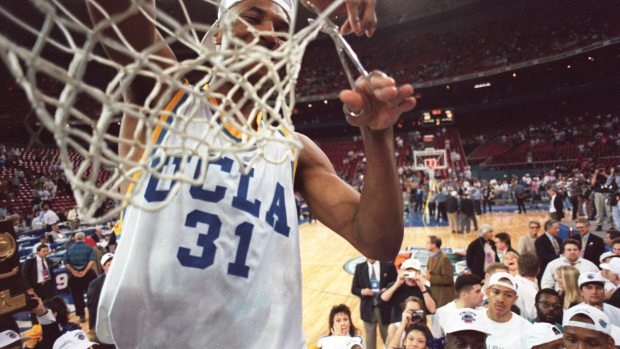
On 8 August, U.S. District Judge Claudia Wilken ruled in favour of former UCLA basketball player O'Bannon and 19 others, declaring that NCAA's longstanding refusal to compensate athletes for the use of their name, image and likenesses (NILs) violates US antitrust laws. In particular, the long-held amateurism justification promoted by the NCAA was deemed unconvincing.

On 14 November, the NCAA has appealed the judgment, claiming that federal judge erred in law by not applying a 1984 Supreme Court ruling. One week later, the NCAA received support from leading antitrust professors who are challenging the Judge Wilken’s reasoning in an amicus curiae. They are concerned that the judgment may jeopardize the proper regulation of college athletics. The professors argued that if Wilken’s judgment is upheld, it

would substantially expand the power of the federal courts to alter organizational rules that serve important social and academic interests…This approach expands the ‘less restrictive alternative prong’ of the antitrust rule of reason well beyond any appropriate boundaries and would install the judiciary as a regulatory agency for collegiate athletics”.   

More...

Image Rights in Professional Basketball (Part II): Lessons from the American College Athletes cases. By Thalia Diathesopoulou

In the wake of the French Labour Union of Basketball (Syndicat National du Basket, SNB) image rights dispute with Euroleague and EA Games, we threw the “jump ball” to start a series on players’ image rights in international professional basketball. In our first blogpost, we discussed why image rights contracts in professional basketball became a fertile ground for disputes when it comes to the enforcement of these contracts by the Basketball Arbitral Tribunal (BAT). Indeed, we pointed out that clubs might take advantage of the BAT’s inconsistent jurisprudence to escape obligations deriving from image rights contracts.

In this second limb, we will open a second field of legal battles “around the rim”: the unauthorized use of players’ image rights by third parties. We will use as a point of reference the US College Athletes image rights cases before US Courts and we will thereby examine the legal nature of image rights and the precise circumstances in which such rights may be infringed. Then, coming back to where we started, we will discuss the French case through the lens of US case law on players’ image rights. 

Source: http://philadelphia.cbslocal.com/2013/09/27/ea-sports-settles-college-likeness-case/ More...


The Olympic Agenda 2020: The devil is in the implementation!

The 40 recommendations of the Olympic Agenda 2020 are out! First thought: one should not underplay the 40 recommendations, they constitute (on paper at least) a potential leap forward for the IOC. The media will focus on the hot stuff: the Olympic channel, the pluri-localisation of the Games, or their dynamic format. More importantly, and to some extent surprisingly to us, however, the IOC has also fully embraced sustainability and good governance. Nonetheless, the long-term legacy of the Olympic Agenda 2020 will hinge on the IOC’s determination to be true to these fundamental commitments. Indeed, the devil is always in the implementation, and the laudable intents of some recommendations will depend on future political choices by Olympic bureaucrats. 

For those interested in human rights and democracy at (and around) the Olympics, two aspects are crucial: the IOC’s confession that the autonomy of sport is intimately linked to the quality of its governance standards and the central role the concept of sustainability is to play in the bidding process and the host city contract.  More...

Asser International Sports Law Blog |

Asser International Sports Law Blog

Our International Sports Law Diary
The Asser International Sports Law Centre is part of the T.M.C. Asser Instituut

Doyen vs. Sporting I: Doyen’s Pyrrhic Victory at the CAS

At the end of December 2015, the CAS decided on a very public contractual dispute between Sporting Clube de Portugal Futebol SAD (Sporting) and Doyen Sports Investments Limited (Doyen). The club was claiming that Doyen’s Economic Rights Participation Agreement (ERPA) was invalid and refused to pay Doyen’s due share on the transfer of Marcos Rojo to Manchester United. The dispute made a lot of noise (see the excellent coverage by Tariq Panja from Bloomberg here, here and here) as it was the first TPO case heard by the CAS after FIFA’s ban. Yet, and it has to be clear from the outset, the case does not affect the legality of FIFA’s TPO ban; it concerned only the compatibility of Doyen’s ERPA with Swiss civil law. The hearing took place in June 2015, but the case was put under a new light by the football leaks revelations unveiled at the end of 2015 (see our blog from December 2015). Despite these revelations, the CAS award favoured Doyen, and was luckily for us quickly made available on the old football leaks website. This blog will provide a commentary of the CAS decision. It will be followed in the coming days by a commentary by Shervine Nafissi on the judgment, on appeal, by the Swiss Federal Tribunal. More...

UEFA’s Financial Fair Play Regulations and the Rise of Football’s 1%

On 12 January 2017 UEFA published its eighth club licensing benchmarking report on European football, concerning the financial year of 2015. In the press release that accompanied the report, UEFA proudly announced that Financial Fair Play (FFP) has had a huge positive impact on European football, creating a more stable financial environment. Important findings included a rise of aggregate operating profits of €1.5bn in the last two years, compared to losses of €700m in the two years immediately prior to the introduction of Financial Fair Play.


Source: UEFA’s eighth club licensing benchmarking report on European football, slide 107.


 Meanwhile the aggregate losses dropped by 81% from €1.7bn in 2011 to just over €300m in 2015.More...


International and European Sports Law – Monthly Report – January 2017. By Saverio Spera.

Editor’s note: This report compiles all relevant news, events and materials on International and European Sports Law based on the daily coverage provided on our twitter feed @Sportslaw_asser. You are invited to complete this survey via the comments section below, feel free to add links to important cases, documents and articles we might have overlooked. 


The Headlines

The Diarra ruling of the Tribunal of Charleroi

On 19 January 2017, the Hainaut Commercial Tribunal – Charleroi rendered its decision on the lawsuit filed by the football player Lassana Diarra against FIFA and the Belgian FA (URBSFA) for damages caused by not being able to exercise the status of a professional football player during the entire 2014/2015 season. The lawsuit is linked to the decision, rendered by the FIFA Dispute Resolution Chamber (DRC) on April 2015, to support Lokomotiv’s decision to terminate the player’s contract and to order Diarra to pay Lokomotiv the amount of EUR 10,500,000 for having breached his contract. According to the plaintiff, Diarra’s opportunity to be recruited by Sporting Charleroi was denied due to the club being potentially considered jointly liable for Diarra’s compensation pursuant to Article 17 (2) RSTP. The Belgian court held strongly that “when the contract is terminated by the club, the player must have the possibility to sign a new contract with a new employer, without restrictions to his free movement”. This case highlighted, once again, the need to read the RSTP in the light of EU law. Moreover, the decision is laying further ground for broader challenges to the RSTP on the basis of EU law (for a deeper insight into the Diarra ruling, see the recent blog written by our senior researcher Antoine Duval) More...


Introducing the new legal challenges of E-Sports. By N. Emre Bilginoglu

Editor’s Note: Emre Bilginoglu[1] is an attorney in Istanbul and the co-founder of the Turkish E-Sports Players Association, a non-profit based in Istanbul that aims to provide assistance to professional gamers and to work on the relevant laws affecting them. 


The world is witnessing the rise of a new sport that is growing at an incredible speed: E-Sports. We are only starting to understand its legal implications and challenges.

In recent years, E-Sports has managed to attract thousands of fans to arenas to see a group of people play a video game. These people are literally professional gamers (cyber athletes)[2] who make money by competing in tournaments. Not all video games have tournaments in which professional players compete against each other.

The most played games in E-Sports competitions are League of Legends (LoL), Defense of the Ancients 2 (DotA 2) and Counter-Strike: Global Offensive (CS:GO). LoL and DotA are both Multiplayer online battle arena (MOBA) games, a genre of strategy video games in which the player controls a single character in one of two teams. The goal of the game is to destroy the opponent’s main structure. CS:GO is a first-person shooter (FPS) game, a genre of video games where the player engages combat through a first-person perspective. The main objective in CS:GO is to eliminate the opposing team or to terrorize or counter-terrorize, planting bombs or rescuing hostages. Other games that have (popular) E-Sports competitions include Starcraft II (real time strategy), Hearthstone (collectible card video game), Call of Duty (FPS) and FIFA (football).

The gaming requires cooperation between team players, a high level of concentration, rapid reactions and some seriously fast clicking. E-Sports is a groovy term to describe organized competitive computer gaming. The E-Sports industry is exponentially growing, amounting to values expressed in billions of dollars. According to Newzoo, a website dedicated to the collection of E-Sports data, there are some 250 million occasional viewers of E-Sports with Asia-Pacific accounting for half of the total amount. The growth of the industry is indubitably supported by online streaming media platforms. This article aims to explain what E-Sports is and to give the readers an insight on the key legal questions raised by it. More...


Time for Transparency at the Court of Arbitration for Sport. By Saverio Spera

Editor’s Note: Saverio Spera is an Italian lawyer and LL.M. graduate in International Business Law from King’s College London. He is currently an intern at the ASSER International Sports Law Centre.


The time is ripe to take a closer look at the CAS and its transparency, as this is one of the ways to ensure its public accountability and its legitimacy. From 1986 to 2013, the number of arbitrations submitted to the CAS has grown from 2 to more than 400 a year. More specifically, the number of appeals submitted almost doubled in less than ten years (from 175 in 2006, to 349 in 2013[1]). Therefore, the Court can be considered the judicial apex of an emerging transnational sports law (or lex sportiva).[2] In turn, the increased authority and power of this institution calls for increased transparency, in order to ensure its legitimacy.[3]

More...


UEFA’s betting fraud detection system: How does the CAS regard this monitoring tool? By Emilio García.

Editor’s note: Emilio García (emilio.garcia@uefa.ch)  is a doctor in law and head of disciplinary and integrity at UEFA. Before joining UEFA, he was the Spanish Football Federation’s legal director (2004–12) and an arbitrator at the CAS (2012–13).In this blog, Emilio García provides a brief review of a recent case before the Court of Arbitration for Sport (CAS): Klubi Sportiv Skënderbeu v UEFA (CAS 2016/A/4650)[1], in which he acted as main counsel for UEFA. 


Sport and match-fixing – A quick overview

Match-fixing is now legally defined as “an intentional arrangement, act or omission aimed at an improper alteration of the result or the course of a sports competition in order to remove all or part of the unpredictable nature of the aforementioned sports competition with a view to obtaining an undue advantage for oneself or for others”.[2] It has been said that there has always been match-fixing in sport.[3] From the ancient Olympic Games to the most important global sports competitions of today, manipulation of results has always been an all-too-frequent occurrence.

We have seen a number of very prominent instances of this kind of issue over the years. One of the most remarkable examples, which was even the subject of a film,[4] was the match-fixing episode during the 1919 World Series, where several players from the Chicago White Sox were found guilty of accepting bribes and deliberately losing matches against the Cincinnati Reds.[5]

The situation has changed considerably since then. In particular, the globalisation of the sports betting industry has had a massive impact, with recent studies estimating that between €200bn and €500bn is betted on sport every year.[6] Match-fixing does not just affect football either;[7] it is also affecting other sports, most notably tennis.[8] More...


The Diarra Ruling of the Tribunal of Charleroi: The New Pechstein, Bosman or Mutu?

Yesterday the sports law world was buzzing due to the Diarra decision of the Tribunal de Commerce du Hainaut (the Tribunal) based in Charleroi, Belgium. Newspapers were lining up (here, here and here) to spread the carefully crafted announcement of the new triumph of Jean-Louis Dupont over his favourite nemesis: the transfer system. Furthermore, I was lucky enough to receive on this same night a copy of the French text of the judgment. My first reaction while reading quickly through the ruling, was ‘OMG he did it again’! “He” meaning Belgian lawyer Jean-Louis Dupont, who after a string of defeats in his long shot challenge against FIFA’s TPO ban or UEFA’s FFP (see here and here), had [at least I believed after rushing carelessly through the judgment] manufactured a new “it”: a Bosman. Yet, after carefully re-reading the judgment, it became quickly clear to me that this was rather a new Mutu (in the sense of the latest CAS award in the ‘Mutu saga’, which I have extensively analysed on this blog and in a recent commentary for the new Yearbook of International Sports Arbitration) coupled with some reflections reminding a bit (but not really as will be explicated below) the Pechstein case.

In this blog, I will retrace briefly the story behind the case and then analyse the decision of the Belgium court. In doing so, I will focus on its reasoning regarding its jurisdiction and the compatibility of article 17(2) RSTP with EU law.More...

The Russian Doping Scandal at the Court of Arbitration for Sport: The IPC’s Rio Ineligibility of Russian Paralympic Athletes

Editor's note: This blog is part of a special blog series on the Russian doping scandal at the CAS. Last year I analysed the numerous decisions rendered by the CAS ad hoc Division in Rio and earlier this year I reviewed the CAS award in the IAAF case.

Unlike the International Association of Athletics Federations (IAAF), the International Paralympic Committee (IPC) was very much unaffected by the Russian doping scandal until the publication of the first McLaren report in July 2016. The report highlighted that Russia’s doping scheme was way more comprehensive than what was previously thought. It extended beyond athletics to other disciplines, including Paralympic sports. Furthermore, unlike the International Olympic Committee (IOC) the IPC had a bit more time to deal with the matter, as the Rio Paralympic Games were due to start “only” in September.

After the release of the McLaren Report, the IPC president Sir Philip Craven was “truly shocked, appalled and deeply saddened at the extent of the state sponsored doping programme implemented in Russia”. He immediately announced the IPC’s intention to review the report’s findings and to act strongly upon them. Shortly thereafter, on 22 July, the IPC decided to open suspension proceedings against the National Paralympic Committee of Russia (NPC Russia) in light of its apparent inability to fulfil its IPC membership responsibilities and obligations. In particular, due to “the prevailing doping culture endemic within Russian sport, at the very highest levels, NPC Russia appears unable or unwilling to ensure compliance with and the enforcement of the IPC’s Anti-Doping Code within its own national jurisdiction”. A few weeks later, on 7 August, the IPC Governing Board decided to suspend the Russian Paralympic Committee with immediate effect “due to its inability to fulfil its IPC membership responsibilities and obligations, in particular its obligation to comply with the IPC Anti-Doping Code and the World Anti-Doping Code (to which it is also a signatory)”. Indeed, these “obligations are a fundamental constitutional requirement for all National Paralympic Committees (NPCs), and are vital to the IPC’s ability to ensure fair competition and to provide a level playing field for all Para athletes around the world”. Consequently, the Russian Paralympic Committee lost all rights and privileges of IPC membership. Specifically, it was not entitled to enter athletes in competitions sanctioned by the IPC, and/or to participate in IPC activities. Thus, “the Russian Paralympic Committee will not be able to enter its athletes in the Rio 2016 Paralympic Games”. More...


The Russian Doping Scandal at the Court of Arbitration for Sport: The IAAF’s Rio Ineligibility of Russian Athletes

Since the release of the earth-shattering ARD documentary two years ago, the athletics world has been in a permanent turmoil. The International Athletics Association Federation (IAAF) is faced with both a never-ending corruption scandal (playing out in front of the French police authorities) and the related systematic doping of Russian athletes. The situation escalated in different phases led by the revelations of Russian insiders. First, in December 2014 with the ARD documentary, which demonstrated how widespread (and organized) the recourse to doping was in Russian athletics. It triggered the Pound investigation financed by the World Anti-Doping Agency (WADA), which led to two damaging reports (available here and here) for the Russian anti-doping system and the IAAF itself. Thereafter, in November 2015, the IAAF had no other choice but to provisionally suspend the Russian athletics federation (ARAF then RusAF) and its members from IAAF competitions. Yet, this was only the beginning as shortly after the former head of Moscow’s anti-doping laboratory provided a detailed sketch to the New York Times of the operation of a general state-led doping scheme in Russia. The system was designed to avert any positive doping tests for top-level Russian sportspeople and was going way beyond athletics. These allegations were later largely confirmed and reinforced by the McLaren investigation initiated by WADA in May 2016, and which published its first report in July 2016 shortly before the Rio Olympics. In June 2016, the IAAF anticipated the conclusions of the report (it had received most of McLaren’s evidence beforehand) and decided to maintain the ineligibility of Russian athletes for IAAF competitions, and for the Rio Olympics. It did, however, foresee a narrow exception for Russian athletes able to show that they were properly tested outside of Russia. Nonetheless, the athletes using this exception were to compete under a neutral flag at the Olympics. Unsurprisingly, Russian athletes led by pole superstar (and now IOC member), Yelena Isinbayeva, and the Russian Olympic Committee decided to challenge this decision in front of the Court of Arbitration for Sport (CAS). Interestingly, while the decision was rendered on 21 July 2016, the full text of the award was publically released only on 10 October 2016. In September, I analysed the Rio CAS Ad Hoc Decisions involving Russian athletes aiming to participate to the Olympics. I will now turn to the IAAF decision, which is of great importance to the future of the anti-doping system. Indeed, it lays out the fundamental legal boundaries of the capacity of international federations to impose sanctions on their members (and their members) in order to support the world anti-doping fight. More...

International and European Sports Law – Monthly Report – November and December 2016. By Saverio Spera.

Editor’s note: This report compiles all relevant news, events and materials on International and European Sports Law based on the daily coverage provided on our twitter feed @Sportslaw_asser. You are invited to complete this survey via the comments section below, feel free to add links to important cases, documents and articles we might have overlooked. 


The Headlines

The Russian State Doping Scandal and the crisis of the World Anti-Doping System

Russian doping and the state of the Anti-Doping System has been the dominant international sports law story in November and December. This is mainly due to the release of the second report of the McLaren’s investigation on 9 December 2016. The outcome of McLaren’s work showed a “well-oiled systemic cheating scheme” that reached to the highest level of Russian sports and government, involving the striking figure of 30 sports and more than 1000 athletes in doping practices over four years and two Olympic Games. The report detailed tampering with samples to swap out athletes’ dirty urine with clean urine.More...